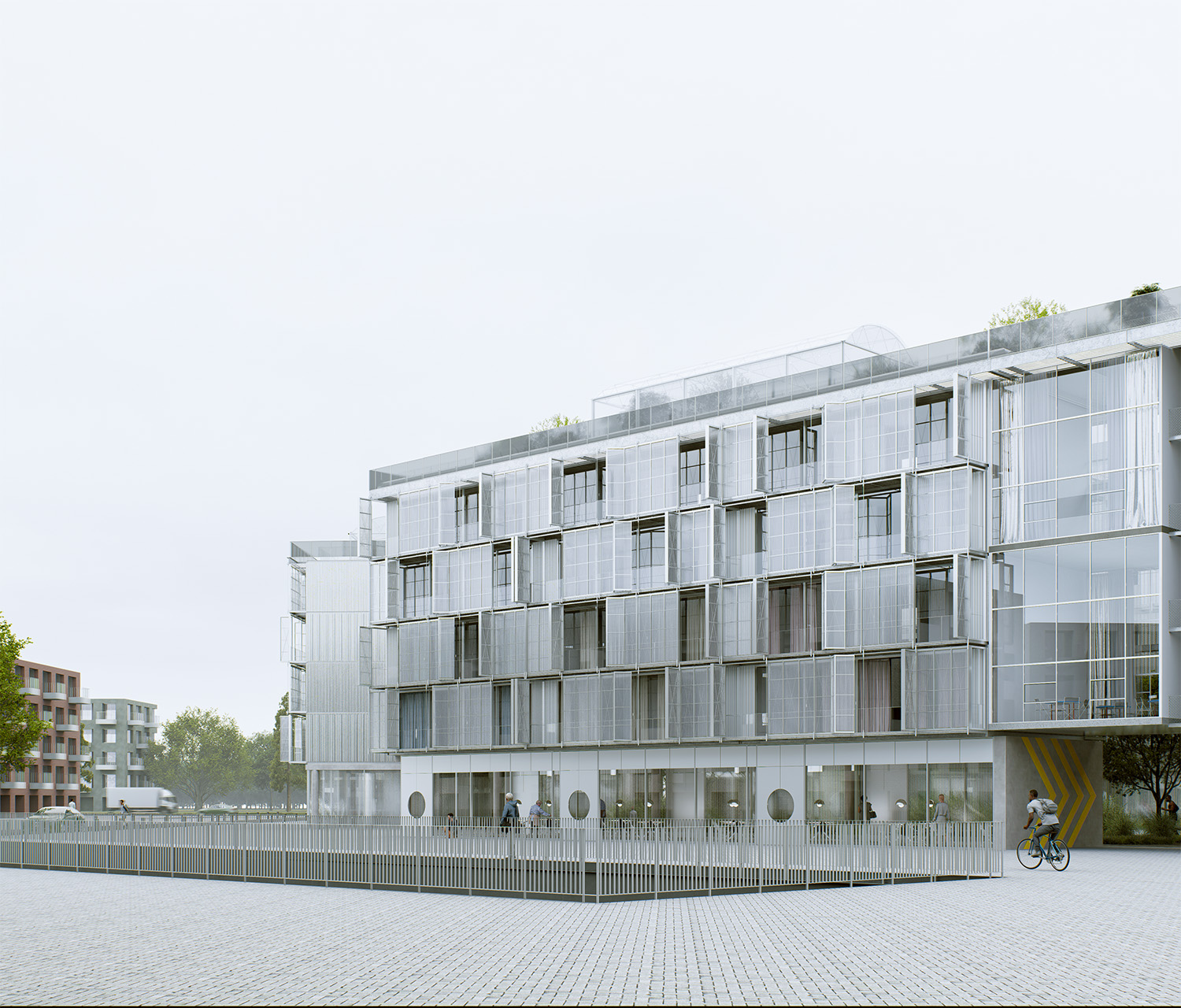
In this framework, the corner is redefined as an urban reference point, a plaza and meeting space that strengthens the relationship between building and city.
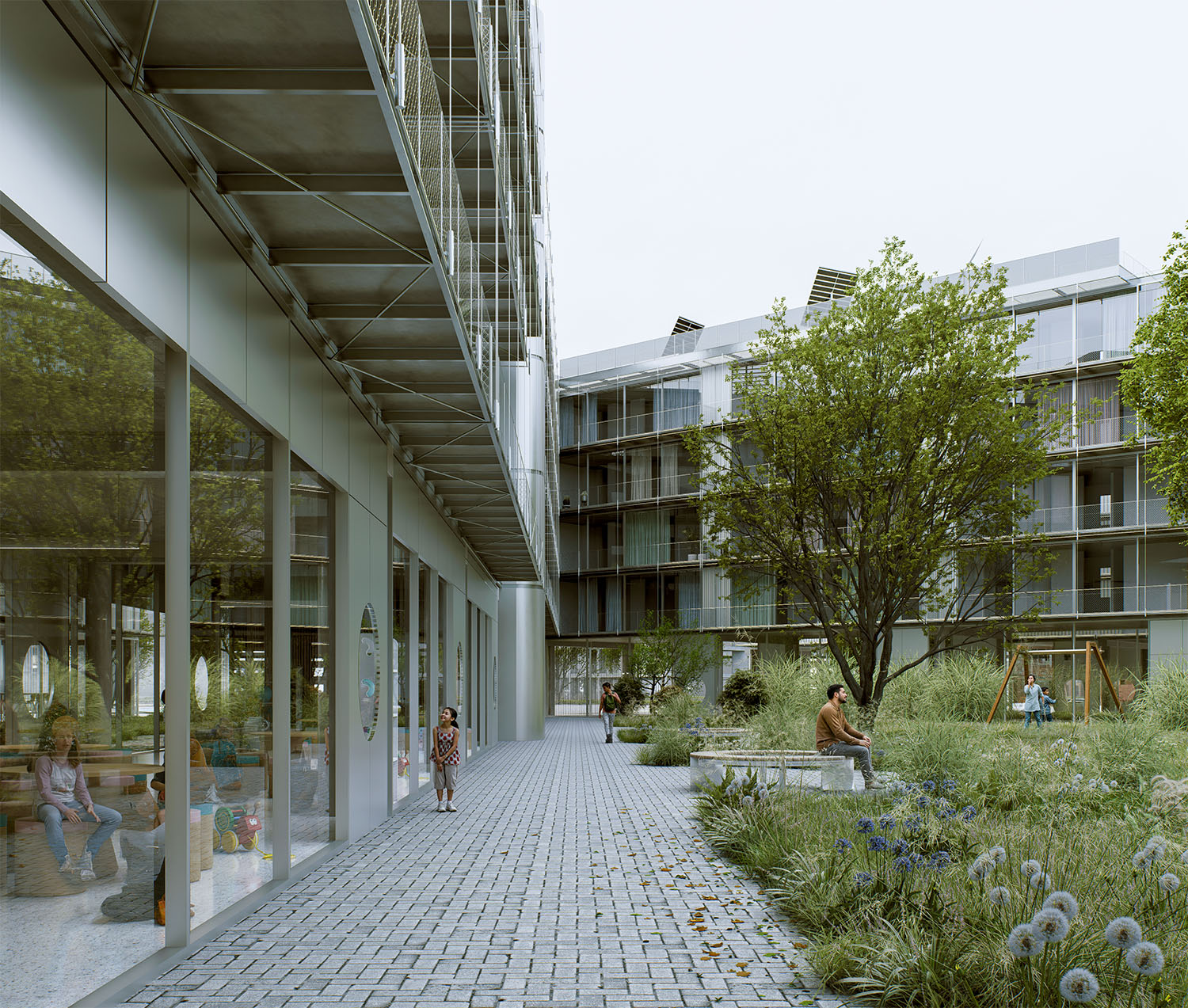
The ground floor acts as a continuous threshold between the city, the building, and the interior garden; passageways cross the project at street level and channel the most public functions toward the center of the block, allowing commercial and community spaces to expand into the central void and accommodate diverse uses over time.
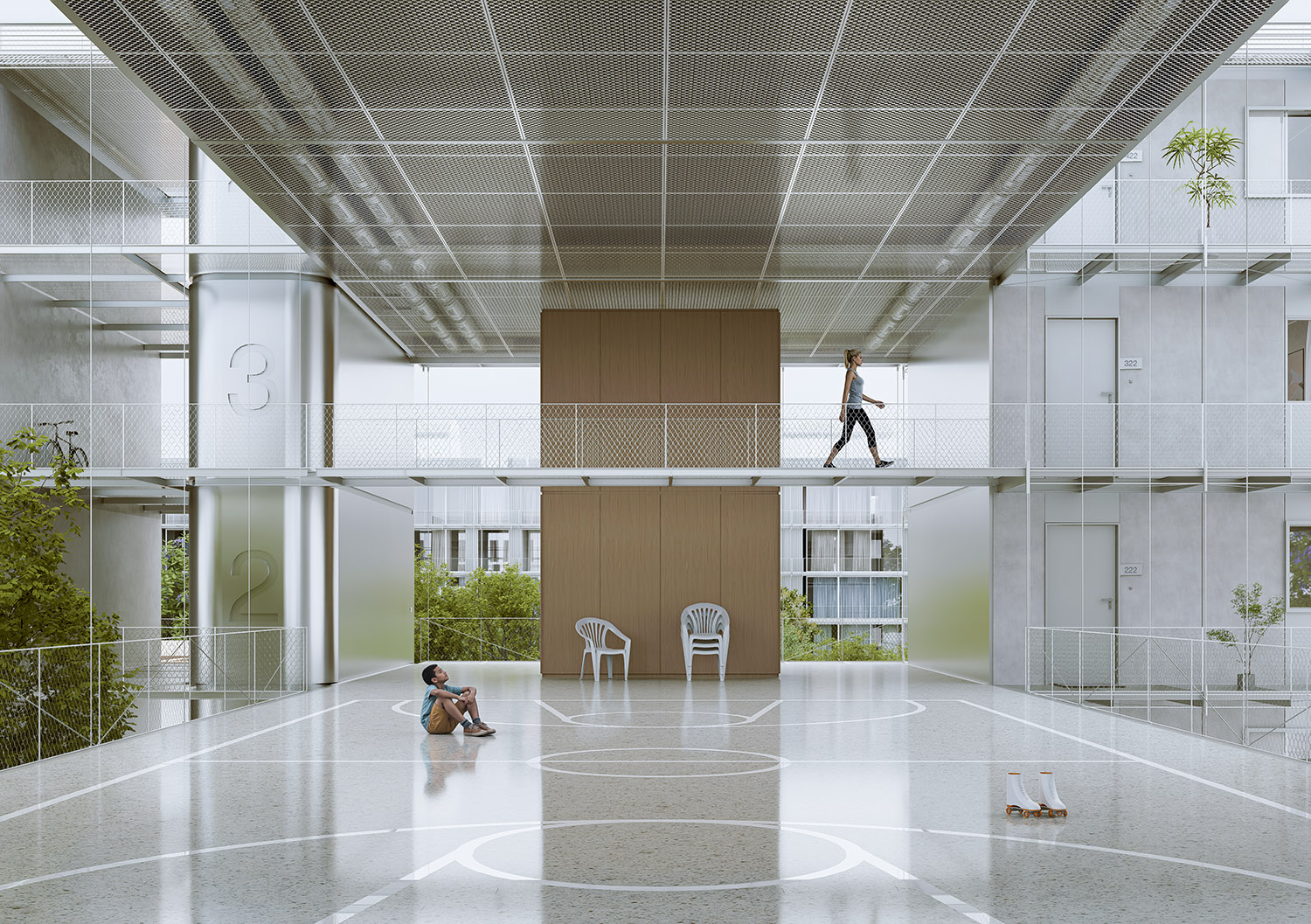
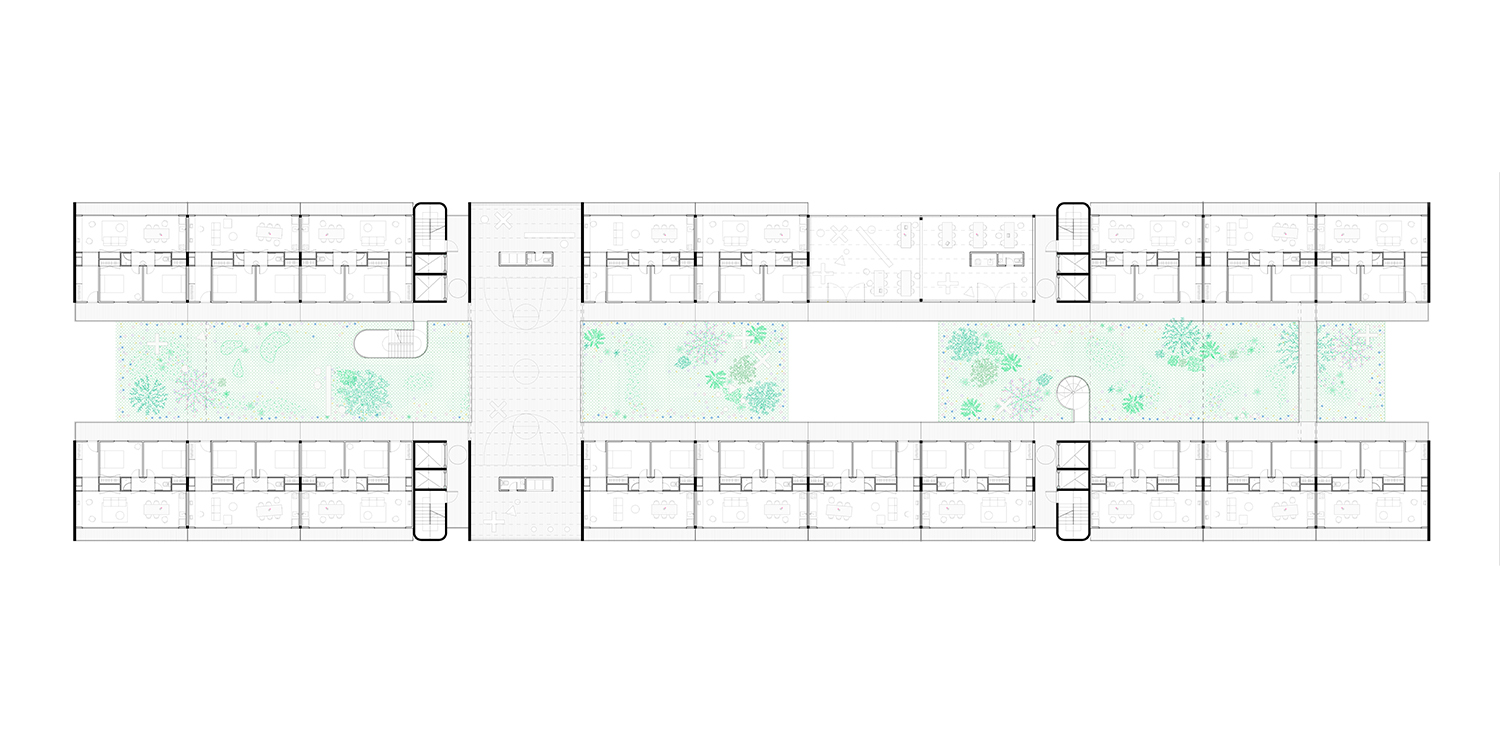
The buildings are organized in pairs and connected through bridges that incorporate shared programs and encourage transversal relationships between courtyards, while the central void ceases to be residual and assumes a regulating role, distributing light, air, and activity.
At the domestic scale, the housing is organized around a central technical core that concentrates installations, optimizes circulation, and allows for cross-ventilation, structuring the floor plan and articulating private and public areas to establish a balance between intimacy and community.